
















Healing Complex Trauma: A DBT-Informed Approach to C-PTSD
An Integrative Framework Weaving Together Polyvagal Theory, Parts Work, and DBT Principles AND SKILLS
This 9-hour course for therapists is taught by Sheri Van Dijk, MSW, RSW.
Clients with C-PTSD often present with a wide range of difficulties, including chronic emotion dysregulation, dissociation, a fragmented sense of self, unstable relationships, depression, suicidality, and substance use.
These challenges are deeply interconnected, each often contributing to and sustaining the others, making treatment far more complex than addressing any single symptom in isolation.
For therapists, the challenge is knowing where to begin, what to prioritize, and how to adapt treatment as these complex presentations unfold.
Even with a solid therapeutic approach, it can be difficult to address all these challenges within a clear, cohesive treatment plan.
By integrating DBT, Polyvagal Theory, and Parts Work, this course provides a practical framework for understanding and treating the complexity of C-PTSD.
DBT gives you practical skills to help clients regulate intense emotions and tolerate distress.
Polyvagal Theory helps you understand the nervous system states that drive your clients’ responses and support nervous system regulation.
Parts Work provides a compassionate way of working with dissociation and fragmented self-states, helping clients develop a more cohesive sense of self.
You’ll leave this course with an integrated, evidence-informed framework you can immediately apply in your work with clients with trauma and C-PTSD.
Recognize the patterns driving complex trauma presentations, including emotion dysregulation, dissociation, fragmented self-states, and persistent troublesome behavioral patterns.
Know where to begin, what to prioritize, and when to shift focus when clients present with multiple, interconnected difficulties.
Determine when clients need stabilization before trauma processing and use practical strategies to build greater safety and capacity for therapeutic work.
Respond more effectively when clients become overwhelmed, emotionally reactive, shut down, or disconnected during sessions.
Draw from DBT, Polyvagal Theory, and Parts Work to choose interventions that fit what is happening for the client in the moment.
Help clients develop practical skills to regulate emotions, tolerate distress, manage urges, and respond differently to difficult internal experiences.
Support lasting changes in how clients relate to themselves and others, improving relationships, wellbeing, and quality of life.
I’ve taken other courses that were superficial overviews of the material. This course was thorough and in-depth, and focused on giving therapists skills they can actually use with clients.
Sheri is an extremely knowledgeable and experienced presenter, and the depth of her expertise came through in the training.
I was so excited about the course that I told my supervisor about it, and she immediately wanted to take it herself. I would highly recommend this course to other therapists.
Fort Pierce, FL, USA
Sheri is a Social Worker who has been working with clients with severe mental health problems from a DBT-informed perspective since 2000. With extensive experience in hospital and community settings, Sheri now sees clients in private practice and provides consultation and training internationally to other clinicians.
She is an expert in Dialectical Behavior Therapy (DBT)-informed therapy, and works from a trauma-informed perspective. She is a certified Eye Movement Desensitization and Reprocessing (EMDR) therapist and an EMDRIA-Approved Consultant. She has also trained extensively in Deep Brain Reorienting (DBR) and is a Neurofeedback provider.
Sheri was the winner of the R.O. Jones award for her research on using DBT with bipolar disorder, presented at the Canadian Psychiatric Association Conference.
Sheri is the author of numerous books that focus on helping readers learn DBT skills and apply them to a variety of mental health problems, including The DBT Workbook for C-PTSD, The DBT Workbook for Emotional Relief, and the best-selling Don’t Let Your Emotions Run Your Life for Teens.
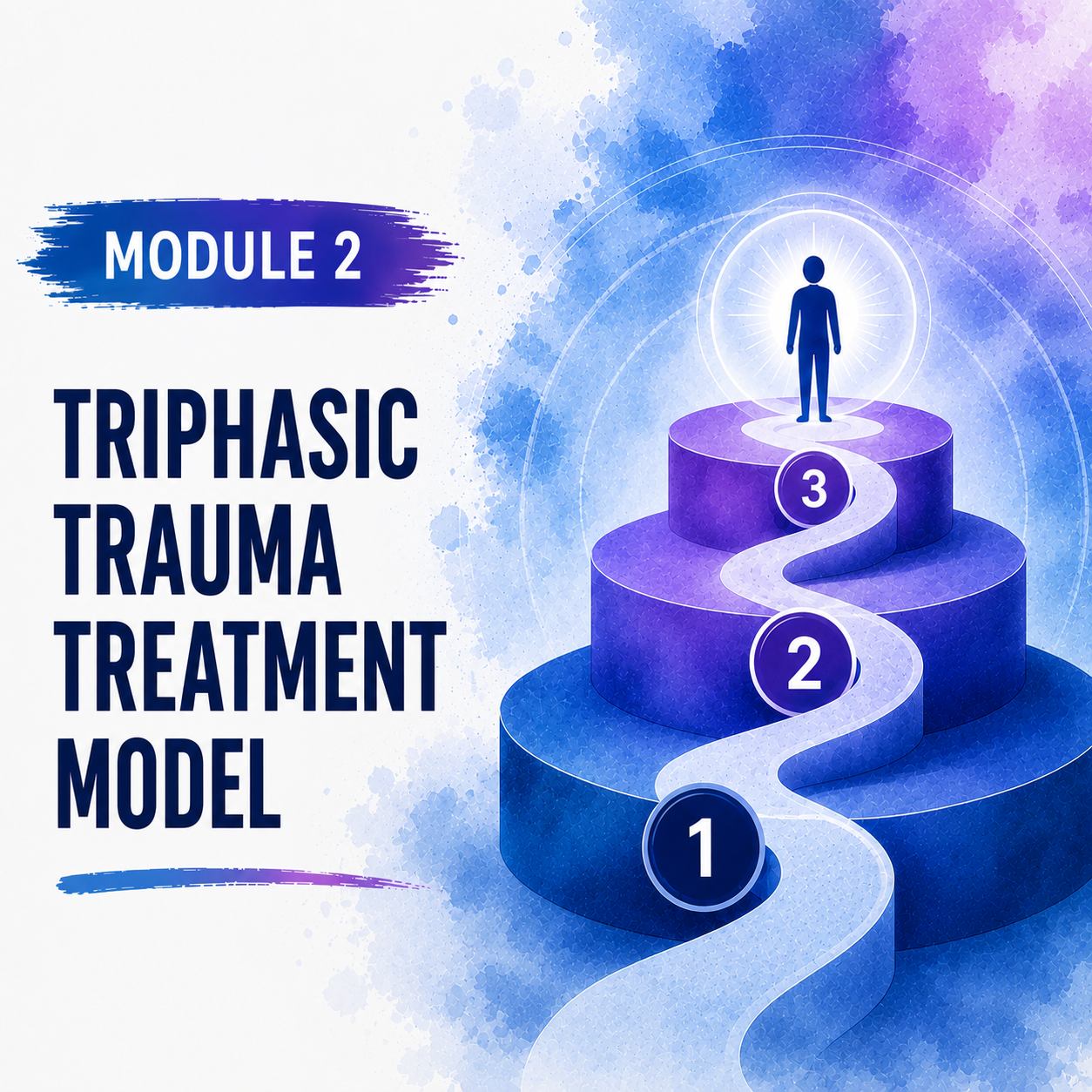
Learn what changes across the 3 stages of complex trauma treatment, from safety and stabilization through trauma processing and reconnection
Understand what belongs in each stage so you can pace treatment without moving into trauma processing before a client is ready
Discover how to take a trauma history without overwhelming clients, including those who don’t have explicit memories of what happened
Understand what reinforces problem behaviors and can unintentionally make them more likely to continue
Learn how to identify the triggers, vulnerabilities, and consequences driving a client’s behavior
Use behavioral analysis to identify where change can happen and which skills a client needs
Discover how to recognize the subtle signs that a client has been triggered, beyond obvious flashbacks or dissociation
Understand the nervous system states clients move through under threat, and what drives shifts between them
Learn how neuroception, the nervous system’s automatic detection of safety and threat, drives reactions clients can’t simply think their way out of
Understand how to identify a client’s nervous system states and recognize what triggers shifts between them
Discover practical strategies for helping clients move out of fight, flight, freeze, or shutdown
Learn how to help clients build greater safety and stability before moving into trauma processing
Recognize the different ways dissociation can show up in clients, including signs that are easily overlooked
Understand dissociation as a survival response and why it can persist long after the trauma has passed
Discover how structural dissociation can help explain fragmented self-states and internal conflict
Understand how trauma-related parts develop and the different ways they can show up in therapy
Discover how DBT’s states of mind can provide a practical way to understand and work with parts
Learn how to help clients create space from overwhelming parts and access their Wise Mind
Learn practical strategies for helping clients notice, understand, and communicate with their parts
Discover grounding and orienting techniques that help clients reconnect with the present when trauma-related parts take over
Learn how to use mindfulness safely with trauma clients, including when standard practices may increase dissociation or distress
Understand how to help clients accept painful realities without confusing acceptance with approval, forgiveness, or giving up
Gain a practical, step-by-step approach for helping clients move from resistance toward acceptance
Discover strategies to help clients shift out of resistance and practice acceptance with difficult experiences
In this 1-hour webinar session, Sheri will further expand on the concepts of the course as she answers questions and performs mini-demonstrations.
**You’ll get the most value out of the course by attending this live session.
However, if you can’t attend the live session, you can submit questions beforehand, as it will be recorded.
The video and audio recordings of the experiential session will be available within 48 hours after the live session is over.
NORTH AMERICA
October 22, 2026
2-3pm PT /5-6pm ET
UNIted Kingdom
October 22, 2026
10-11pm
AUSTRALIA
October 23, 2026
8-9am
These 5 handouts will help you support clients with behavioral tracking and analysis. They include a Behavior Tracking Sheet, a Behavioral Chain Analysis worksheet, a Behavioral Chain Analysis Chart, Client Diary Cards Instructions, and a Pros and Cons List. Together, they offer tools for monitoring target behaviors, examining the events leading up to them, and weighing the costs and benefits of behavioral choices.
A collection of readings to supplement the course content. If you’d like to explore the topics presented in the course in greater depth, this resource list offers evidence-based resources to expand your understanding and strengthen your clinical confidence.
These documents distill the essential points from each course module. They’re designed to help you review key concepts, reinforce your learning, and apply the strategies from the course to your clinical work without rewatching hours of content.
This course gave me what I was looking for – a deeper understanding of trauma and more skills I could use with clients. Sheri brought the theory to life through many examples, exercises, and practical skills.
I also appreciated the emphasis on safety and stabilization and the importance of being cautious when using these skills with clients who have experienced trauma.
I used one of the course exercises with a client, which immediately reduced the client’s distress. I’ve also started using other skills from the course in my work.
Sheri is very clear and experienced. She explains complex trauma in a way that makes it easy to understand.
I really enjoyed the course.
Didcot, Oxfordshire, UK
CANADA: Submit the certificate to CCPA for CECs and CRPO for PD credits
AUSTRALIA: PD points available for PACFA and ACA
The course is geared toward psychotherapists, counselors, psychologists, psychiatrists, and other helping professionals who want to feel confident working with clients who experience trauma, C-PTSD, or PTSD. It is suitable for therapists who are new or experienced in this work.
No. While DBT provides an important foundation, the course also integrates Polyvagal Theory and Parts Work, giving you additional ways to understand and work with nervous system responses, dissociation, and fragmented self-states.
No. The concepts and skills are also relevant to clients with trauma histories who struggle with emotion dysregulation, dissociation, nervous system activation, problem behaviors, or fragmented self-states, whether or not they have a formal C-PTSD diagnosis.
The concepts and skills taught in this course can be integrated into many therapeutic approaches, including CBT, ACT, EMDR, IFS, somatic therapies, and other trauma-informed approaches.
It’s both. The course has 9 hours of content. There are 13 pre-recorded core modules, 1 live webinar, and several extra materials to support you in your work.
LIVE WEBINAR WITH SHERI
Dates and Times of the Live Session
North America: October 22, 2026, 2-3pm PT /5-6pm ET
United Kingdom: October 22, 2026, 10pm – 11pm
Sydney, Australia: October 23, 2026, 8am-9am
Auckland, New Zealand: October 23, 2026, 10am-11am
LIVE WEBINAR WITH SHERI
Dates and Times of the Live Session
North America: October 22, 2026, 2-3pm PT /5-6pm ET
United Kingdom: October 22, 2026, 10pm – 11pm
Sydney, Australia: October 23, 2026, 8am-9am
Auckland, New Zealand: October 23, 2026, 10am-11am
If you don’t receive value from the course after 7 days of registering, you can ask for your money back.
You can download your certificate for 9 hours of course content once you pass the short course quiz.
USA
NBCC – The Mind Body Training Institute has been approved by NBCC as an Approved Continuing Education Provider, ACEP No. 8016. Programs that do not qualify for NBCC credit are clearly identified. Mind Body Training Institute is solely responsible for all aspects of the programs. This program is approved for 8.45 clock hours.
Canada
CECs – CCPA (Canadian Counselling and Psychotherapy Association). CCPA will give CECs when you submit your certificate to them.
PD points – CRPO (College of Registered Psychotherapists of Ontario). CRPO will give PD points when you submit your certificate to them.
Australia
ACA (Australian Counselling Association):
10 OPD (Ongoing Professional Development) points
PACFA (Psychotherapists and Counsellors Federation of Australia):
9 hours of category A CPD


You will have access to the materials in the learning center for 180 days (6 months) from the date you signed up for the course.
However, you can download all materials and save them forever.

Sheri brought together different theories and approaches into a thoughtful, comprehensive framework.
She consistently gave clinical examples that showed how the concepts show up with clients, how to bring different skills into the work, and how to adjust them for individual clients.
I will definitely draw on the crisis management skills, DBT strategies, and reframes from the course.
I’d highly recommend this course. Even if you’ve been doing this work for a long time, the integration and reframing can give you new ways to approach your work.
Vancouver, BC
If you don’t find value after 7 days, we’ll refund 100% of your fee.
If so, send us an email.
Mind Body Training Institute | All Rights Reserved | Disclaimer | Privacy Policy
Mind Body Training Institute All Rights Reserved Disclaimer | Privacy Policy
©Mind Body Training Institute
Who do we contact?
Juliet Austin Coaching & Copywriting / Australia Counselling & Consulting Pty Ltd only contacts individuals who specifically request that we do so or in the event that they have signed up to receive our free information or have purchased one of our products.
What information do we collect?
We collect information in two categories:
1. Personally Identifiable Information (PII)
All such information is strictly protected and used only for delivering the content and products the user has signed up for or purchased, or for finding other men and women who may find our information valuable. This information is NEVER used for other purposes and is NEVER shared with 3rd parties for their own use. The only exception to this could occur if you choose to purchase one of our products via a third party link. Some of the third party partners we work with, offer their own bonus packages when you purchase our product through their promotional link. In order to fulfill on the promised bonus package, we provide them with your name and email address.
The sharing of this information is only for the purpose of bonus fulfillment. We will not share PII that is not necessary to fulfill the purchase you made.
A note about demographic information: We contract with information providers that help us better understand people visiting our sites and advertise to those who find our content relevant. We may share PII with such companies provided that they have explicit policies to not share our data with any other parties and solely for the purpose of helping us understand our customers better. This technique is also called “database marketing”. It is practiced by virtually every US corporation. Every US consumer can assume that there is a fair amount of available data about them, including personal data such as buying preferences and education level. There is no central “opt out” place that we are aware of. There are efforts underway to reach a standard that would apply automatically based on browser settings. Regardless of the state of privacy as a whole, you can avoid us finding out extra demographic information about you by doing the following:
2. Anonymous Usage History (non PII)
This information is strictly limited to the history of activities that the user engaged in while on our site. it does NOT include any personally identifiable information (PII). For example, the string “sub+customer” in a cookie (see below for what cookies are) might indicate that you are both a subscriber AND a customer. The purpose of this information is to improve your experience. For example, by storing the fact that you are already a subscriber, we do not need to bother you with an irrelevant subscriber box.
Similarly, by noting that you are a customer, we can “bookmark” the last video frames you watched in our member area and remind you of this the next time you visit. There is a small subset of this history that we use with 3rd parties, such as Google, for the purpose of measuring and improving the efficacy of advertising campaigns. Some of these third parties, aggregate such information across many websites. This allows them to identify users who are more likely to be interested in specific offerings like fashion, sports, education and so on. As an Internet user, you may experience the results of such aggregation by noticing how the ads displayed on Yahoo, for example, better match your interests (the optimistic scenario), or at least more closely match a website that you recently visited. Whether you find this annoying and spooky or helpful and relevant, or perhaps both, you are in good company. This area of Internet advertising is new and controversial.
Please Note… (a) third parties may use cookies, web beacons, and similar technologies to collect or receive information from your website and elsewhere on the internet and use that information to provide measurement services and target ads, (b) how users can opt-out of the collection and use of information for ad targeting, and (c) where a user can access a mechanism for exercising such choice (e.g., providing a link to www.aboutads.info/choices).
The tradeoff between privacy vs. commercial efficiency has a long history, for example, the “Do not call” list. In any event, it is likely that either the government or the industry will adopt some form of “opt out” capability in the future to address these concerns.
What are cookies/clear GIFs and how do we use them? Cookies: Like many other commercial sites, our site utilizes standard technologies called “cookies” and clear GIFs to collect information about how our Site is used. A cookie is a small data text file, which a website stores on your computer’s hard drive (if your web browser permits) that can later be retrieved to identify you to us. Cookies were designed to help a website recognize a user’s browser as a previous visitor and thus save and remember any preferences that may have been set while the user was browsing the site. A cookie cannot be read by a website other than the one that set the cookie. A cookie cannot pass on a computer virus or capture any of the Personally
Identifiable information.
Clear GIFs: At times, we work with third-party service partners that employ clear GIFs (also known as pixel tags, single pixel GIFs, web beacons or action tags) for our benefit to help us measure advertising effectiveness. Clear GIFs are tiny graphics with a unique identifier, similar in function to cookies, and are used to track the online movements of our users. The main difference between the two is that clear GIFs are invisible on the page and are much smaller, about the size of the period at the end of this sentence. Clear GIFs are not tied to your Personally Identifiable Information and only track the visitor traffic and behavior to and on our Site. Clear GIFs can “work with” existing cookies on a computer if they are both from the same website or advertising company. That means, for example, that if a person visited “www.companyX.com”, which uses an advertising company’s clear GIF, the website would match the clear GIFs identifier and the advertising company’s cookie ID number, to show the past online behavior for that computer. This collected information can be shared with the advertising company. We do, at times, provide such information to our third-party advertising service partners, but that information never includes personally identifiable information.
How do we store your email information?
Your email information (email address, first name) is stored at the list server that delivers newsletters. Your information can only be accessed by those who help manage those lists in order to deliver e-mail to those who would like to receive email. All of the emails that are sent to you by us include an unsubscribe link in them. You can remove yourself at any time from our newsletters by unsubscribing here. If you have purchased any of my programs, you will continue to receive mailings related to your purchase. If you are an affiliate partner, then you will continue to receive mailings related to our affiliate program. If you would like to be removed from any of these mailings, please contact my support team and they can assist you. Disclaimer This policy may be changed at any time at ALT’s discretion. If we should update this policy, we will post the updates to this page on our Website. This policy was revised April 30, 2016. If you have any questions or concerns regarding our privacy policy please send us your question here.
If you have any questions or concerns regarding our privacy policy please send us your question by going here. You may also send a letter to Australia Counselling & Consulting Pty Ltd, P O Box 3248, Marrickville, NSW, 2204, Australia.
When you sign up, you’ll also be added to the Mind Body Training Institute’s email list to be notified of future courses. You can unsubscribe at any time.
Privacy Policy