


Consensual Non-Monogamy in Therapy: Best Practices for Therapists
Therapists and Wellness Professionals:
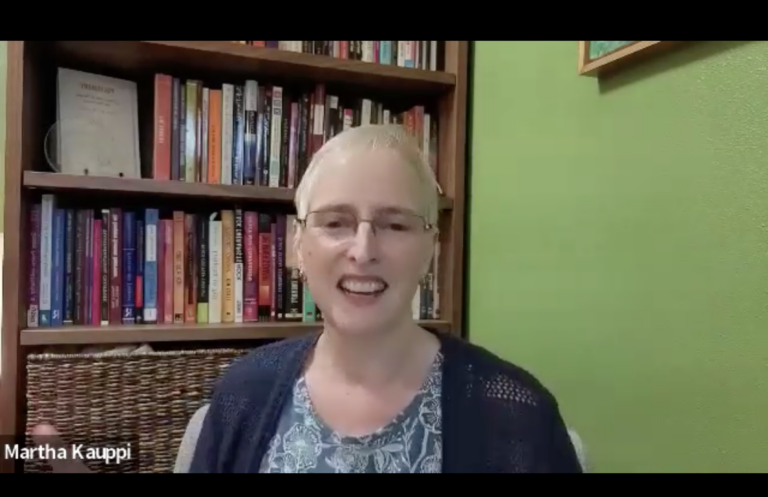
This 11-hour course is taught by Martha Kauppi, a marriage and family therapist and AASECT-certified sex therapist and supervisor.
Therapists and Wellness Professionals:
This 11-hour course is taught by Martha Kauppi, a marriage and family therapist and AASECT-certified sex therapist and supervisor.
Lacking knowledge about CNM can unintentionally harm your clients and hinder their therapeutic progress.
Here’s how you may do your clients a disservice if you don’t understand these relationships:
Fail to recognize that clients may hide their relationship structures out of fear of judgment
Be unaware of personal misconceptions and biases about CNM relationships
Assume CNM is inherently dysfunctional and the reason for relationship problems
Misinterpret jealousy or boundary concerns through a monogamous lens
Struggle to help clients create ethical agreements and build trust in multi-partner dynamics
Ignore or minimize the impact that stigma, marginalization, and family rejection have on people in CNM relationships
Turn away CNM clients due to a lack of confidence in treating them effectively
Even well-intentioned therapists trained in relationship therapy can negatively impact clients when they approach CNM relationships without an informed, affirming framework.
This training will equip you with the knowledge to effectively support CNM clients or those considering this type of relationship.
“Martha normalizes CNM issues, challenges mono-normative biases, and helps therapists approach relationship structures more flexibly.
I have grown a lot. I’m much more intentional about helping clients define their goals from the start, not just focusing on challenges but also on where they want to go.
Martha’s approach is clear, structured, and deeply practical. She doesn’t just teach theory, she makes it immediately applicable. Her training has sharpened my clinical skills and increased my confidence in working with CNM clients.
This training is invaluable. Even if you have experience working with CNM, there is always more to learn. Martha’s ability to distill complex dynamics into actionable strategies and diversity of perspectives makes her training truly exceptional. I highly recommend it!”
Psychotherapist, New Jersey, New York
Apply Core Therapeutic Principles to CNM Clients: Integrate differentiation, emotional regulation, and secure attachment into your work to ensure therapy is effective.
Broaden Your Client Base: The demand for affirming CNM therapists is increasing. Position yourself as an inclusive and knowledgeable provider.
Improve Client Outcomes: Help CNM clients navigate challenges, build healthy relationships, and achieve greater emotional well-being.
Martha Kauppi has a lifelong career in health and sexuality, and is a senior trainer of the Developmental Model of Couples Therapy.
Her private practice in Madison, Wisconsin, specializes in complex relational therapy, sex issues, and alternative family structures, including consensual non-monogamy.
As the founding director of the Institute for Relational Intimacy, Martha offers unique trainings to help therapists all over the world become comfortable, confident, and competent working with relational intimacy challenges and sex issues. She is the author of Polyamory: A Clinical Toolkit for Therapists (and Their Clients).
As a certified sex therapist in a conservative community, I felt like I was navigating this field alone. I wanted to learn more about CNM, leading me to Martha’s training.
I thought I understood relationship dynamics well. However, I hadn’t considered the reality of manipulation, coercive consent, and the unique ways power dynamics can play out in CNM relationships.
Martha pushed me to see these in a new light. That realization changed how I listen, assess, and support my CNM clients.
Martha’s teaching style makes her training so powerful. She is grounded, deeply knowledgeable, and incredibly direct in the best way possible. She doesn’t just present theories, she teaches from real, hands-on clinical experience.
I now have a deeper understanding of differentiation, how to guide clients through difficult conversations, and how to ensure I’m helping clients navigate their relationships.
If you’re a therapist considering Martha’s course, don’t hesitate. Her training is completely worth it.
AASECT Certified Sex Therapist
Midland, Michigan
Martha’s understanding of complex relationship dynamics, power differentials, and how to meet clients exactly where they are is unparalleled. Her approach helped me refine my ability to stay balanced while working with partners who may have different levels of power or influence in their relationships.
Before taking the course, I hadn’t fully grasped how much societal judgment and taboos still surround topics like CNM, infidelity, and kink, even among therapists. She teaches in a way that makes these conversations feel accessible and natural rather than something to tiptoe around.
Martha is truly a leader in this field. Her ability to normalize taboo topics, challenge biases, and expand therapists’ perspectives is outstanding. She teaches in a way that is both accessible and profoundly impactful.
If you’re considering Martha’s course, don’t hesitate. It’s worth every penny.
Martha Schultz, Relationship and Family Coach, Boulder, Colorado
Here is what you’ll learn in Module 1:
Here is what you’ll learn in Module 2:
Facilitate Ethical Consent: Assess and promote clear and informed consent in CNM relationships.
Build Secure Bonds: Help clients cultivate trust and emotional safety within non-monogamous dynamics.
Encouraging Differentiation: Support clients in maintaining individuality while staying emotionally connected.
Redefine Fidelity: Guide clients in honoring agreements and boundaries rather than exclusivity.
Ensure Mutual Benefit: Assist clients in structuring CNM relationships to meet all partners’ emotional needs.
Managing Emotions: Equip clients with strategies to navigate jealousy, self-comparison, and compersion.
Here is what you’ll learn in Module 3:
Craft Authentic Agreements: Help clients create agreements based on genuine preferences rather than fear or control.
Encourage Open Communication: Equip clients to engage in honest discussions that build trust and security.
Support Repair & Accountability: Guide clients through renegotiation and trust repair when agreements are broken.
Strengthen Trust Through Autonomy: Foster security by promoting honesty, consistency, and differentiation.
Here is what you’ll learn in Module 4:
**You’ll get the most value out of the course by attending the live webinar. You’ll be able to ask questions during the webinar.
However, if you can’t attend the live webinar, you can submit questions beforehand, as the webinar will be recorded.
The video and audio recordings of the live webinar will be available within 48 hours of the webinar’s conclusion.
NORTH AMERICA
June 11, 2026
3:00 – 4:00 pm PT
6:00 – 7:00 pm ET
UNIted Kingdom
June 11, 2026
11pm – Midnight
AUSTRALIA
June 12, 2026
8:00 – 9:00 am Sydney, Australia
Dr. Reece Malone addresses common misconceptions and biases therapists may have about clients in CNM relationships, as well as the types of support LGBTQIA+ individuals seek when navigating CNM dynamics. He also addresses how to help LGBTQIA+ clients establish healthy relational agreements, manage jealousy and attachment concerns, and address power imbalances and breaches of trust.
Dr. Elisabeth Sheff, the foremost international expert on children in polyamorous families, explores the diverse family structures and parenting styles found in CNM communities.
She highlights the strengths and challenges of parents and children in CNM families, sharing insights into how CNM relationships can foster children’s communication skills, resilience, and emotional security.
Power, Boundaries, and Consent: Best Practices for CNM and Kink-Affirming Therapy with Stefani Goerlich [Video, Audio & Transcript]
Stephanie Goerlich explores the intersection of consensual non-monogamy (CNM) and kink, highlighting key challenges and misconceptions therapists may have when working with these clients. Topics include consent, power dynamics, attachment, trauma, and ethical considerations.
The discussion provides practical guidance on supporting CNM and kink clients while avoiding bias and stigma. Therapists will gain insights into best practices, cultural competency, and valuable resources for deepening their knowledge.
Safer Sex in CNM Relationships with Lilithfoxx [Video, Audio & Transcript]
In this interview, Lilithfoxx explores the unique considerations of safer sex and STI prevention in consensually non-monogamous (CNM) relationships. She discusses common STIs, effective prevention methods, common myths, testing best practices, and how therapists can support clients in navigating safer sex conversations. Finally, she addresses the role of therapists in reducing stigma and promoting healthier, more informed approaches to sexual health in CNM communities.
Martha’s handouts include:
Handout 1: Personal Change Worksheet: A tool designed to help clients clarify their personal growth goals, identify obstacles, and create a plan for sustained change within relationships.
Handout 2: Discussion Topics for CNM Relationships:
A guide for discussions of CNM relationships. It covers fidelity, emotional security, connection, eroticism, safety, decision-making, visibility, time management, and negotiation.
Handout 3: How I Plan to Handle New Relationship Energy (NRE)
A worksheet to help clients navigate the emotional intensity of new relationship energy (NRE).
Handout 4: Polyamory Relationship Skills: Finding Strengths and Growth Areas: An assessment tool for clients in polyamorous relationships. It focuses on key relational skills such as consent, differentiation, emotional regulation, and maintaining agreements.
Handout 5: Relationship Exploration: Past Experiences and Future Possibilities: An exercise to encourage clients to explore their early relationship models, experiences with fidelity, and thoughts on relationship agreements. It also includes prompts for considering different relationship structures.
This annotated resource list provides recommendations on polyamory, consensual non-monogamy, and related clinical topics. It highlights key books which focus on therapeutic approaches, attachment, and emotional regulation in polyamorous relationships.
Additional resources cover aging in polyamory, managing jealousy, racial dynamics in non-monogamous relationships, and practical guides for exploring open relationships.
This course is jam-packed with in-depth information. These documents summarize the essential concepts from each of the 4 modules and bonus interviews, so you don’t have to rewatch hours of videos when you want to review the content.
Martha’s depth of knowledge is remarkable. I can gush about her for hours. She’s fantastic.”
She equips therapists with real, usable strategies that address the emotional complexity of working with consensual non-monogamy.
One crucial takeaway that will help me with clients was Martha’s statement that agreeing doesn’t build trust; authenticity does. That reframed how I will support couples who avoid conflict or rush to reassure each other instead of honoring their own needs and desires.
The course also helped me shift away from focusing solely on co-regulation. I now pay more attention to differentiation and self-soothing, and I feel more empowered to guide clients through these emotionally charged dynamics. I now have a clearer sense of how to hold space for difference, help clients build the capacity and skills to move toward more meaningful, values-driven agreements.
I would recommend this course to any therapist, regardless of whether they work with CNM clients. The material on boundaries, consent, emotional regulation, and differentiation applies to all types of relational work.
Marriage and Family Therapist Associate, Seattle, Washington
Perhaps you’re on the fence about taking this course because you’re thinking:
Even if you don’t currently see CNM clients, non-monogamy is becoming more visible, and you may already have clients who are considering it or practicing it without disclosing it to you.
Understanding CNM dynamics will make you a more informed, inclusive, and competent therapist, ensuring your clients feel seen, supported and get the help they need.
You’ll also broaden your client base as clients in CNM clients increasingly seek therapy.
2. “I already have a solid foundation in relationship therapy—why do I need a course on CNM?”
Traditional relationship therapy is often based on monogamous norms, which can lead to unintentional bias when working with CNM clients.
This course provides research-backed strategies tailored to non-monogamous relationships, equipping you to handle unique challenges such as multiple attachment bonds, complex boundaries and agreements, and ethical consent.
3. “I don’t agree with or understand CNM, so I’m not sure I want to invest in Learning about it.”
As therapists, we commit to ethical, nonjudgmental care. CNM clients often struggle with stigma, even within therapy settings. As a therapist, you don’t add to this problem.
By educating yourself, you can open your mind to become more flexible and ensuring you provide affirming, evidence-based support, just as you would for any other diverse client.
4. “CNM relationships seem too complex. I don’t feel confident working with people in them.”
Yes, CNM relationships are more complex. This course breaks down key concepts, provides practical strategies, and offers case examples to increase your skills and confidence with CNM clients.
By strengthening your ability to navigate differentiation, consent, emotional regulation, and secure attachment, you’ll enhance your overall clinical skills, making you a more adaptable and effective therapist with all your clients.
5. “I’m already overwhelmed with other courses and responsibilities. I don’t have time for this.”
This course is designed to be practical and directly applicable. It will save you time in the long run by reducing uncertainty and helping you work more effectively with CNM clients.
You have 6 months of access to the materials in our learning center…AND you can download them and keep them forever. This means you can complete the course when you have time available.
Instead of spending hours researching on your own when a CNM case arises, you’ll have the knowledge and tools at your fingertips to provide competent care.
Perhaps you’re on the fence about taking this course because you’re thinking:
The bottom line is…
As a therapist, you don’t need to personally practice CNM to provide competent, ethical care, but you do need the right knowledge and tools.
You never know when a CNM client may show up in your office; when they do, you’ll want to provide the best possible care.
This course will equip you to challenge your unconscious biases, help you work confidently with CNM clients, and stay ahead of the evolving landscape of modern relationships, all while strengthening your overall expertise in relational therapy.
The course has 11 hours of high-value content that you can download and keep forever.
Want to give it a trial?
If you don’t see value in the course after attending the webinar, you can request a refund within 7 days.
Money-back guarantee – if you decide the course isn’t for you after attending the first webinar, you can request a refund within 7 days of registering.
I had already worked with CNM clients, but I sensed the need for more structured guidance, especially as more CNM clients began to appear in my practice. This course certainly fulfilled that need.
Martha’s grounded, confident presence, along with her use of real-world examples, immediately drew me in. She brought a lightness and clarity to the material that made it feel accessible and deeply relevant.
I was impressed by the depth of the course. It’s not something you absorb in one pass. It’s a resource I know I’ll keep returning to, especially when I encounter complex client situations.
Martha showed me how to be more intentional about helping clients clarify their motivations, set agreements they can uphold, and engage in CNM as a thoughtful and evolving process.
The handouts offer practical, ready-to-use tools that can be integrated into sessions immediately, making the theory actionable rather than just theoretical.
For any therapist working with CNM clients or those just beginning to explore this work, this course offers a solid foundation, advanced concepts, and clinical tools that can be used immediately.
It is a great course!
Registered Clinical Counsellor,
Vancouver BC
This course is geared toward individual or couples psychotherapists, counselors, psychologists, psychiatrists, and any other helping professional who wants to learn about working with clients in CNM relationships. Whether you have experience working with CNM clients or not, you’re bound to find this live webinar series helpful.
DATE AND TIME OF THE LIVE WEBINAR
The live webinar will be held at the following date and time:
North America: June 11, 2026 from 3:00-4:00 pm Pacific /6:00-7:00 pm Eastern
UK: June 11, 2026 from 11 pm-12:00 am
Australia (Sydney): June 12, 2026 from from 8:00-9:00am
New Zealand (Auckland): June 12, 2026 from from 10:00-11:00am
Yes! The course is designed for therapists at all experience levels with CNM clients. Martha will help you build competency from the ground up, providing both foundational knowledge and advanced clinical strategies.
Yes. Martha draws from current research on CNM relationships, attachment differentiation theory, and clinical best practices. The course includes the latest data on relationship outcomes and therapeutic approaches.
Yes! One of our key focuses is helping therapists support clients through the process of exploring and transitioning to CNM, including working with couples where one partner is interested and the other is unsure.
Yes! The course includes numerous case studies, practical demonstrations, and role-play exercises to help you apply the concepts in real clinical situations.
The strategies taught in this course can be integrated with other therapy approaches. Martha will show you how to adapt your existing clinical skills while adding CNM-specific interventions.
If you don’t see value in the course after attending the first webinar, you can request a refund within 7 days of registering.
You can download your certificate for 11 hours of course content once you pass the short course quiz.
USA
NBCC – The Mind Body Training Institute has been approved by NBCC as an Approved Continuing Education Provider, ACEP No. 8016. Programs that do not qualify for NBCC credit are clearly identified. Mind Body Training Institute is solely responsible for all aspects of the programs. This program is approved for 10.5 clock hours.
AASECT – This program meets the requirements of the American Association of Sexuality Educators, Counselors and Therapists (AASECT) and is approved for 6 CE credits. These CE credits may be applied toward AASECT certification and renewal of certification.
Canada
CEC’s – CCPA (Canadian Counselling Association). CCPA will give CECs if you submit your certificate to them.
PD credits – CRPO (The College of Registered Psychotherapists) will give you credits when you submit your certificate to them.
If you belong to another professional association in Canada, you’ll have to check with them to see if they will give you credit for the course with your certificate.
Australia
OPDs – ACA (Australian Counselling Association)
10 OPD (Ongoing Professional Development) points
CPDs – PACFA (Psychotherapists and Counsellors Federation of Australia)
11.5 hours of category A CPD
You will have access to the materials in the learning center for 180 days (6 months) from the date you signed up for the course.
However, you can download all materials and save them forever.
As a clinical psychologist specializing in consensual non-monogamy (CNM), Martha’s training program was a game-changer for me. Before taking her course, I often felt alone as I navigated this space. Finding a course led by a seasoned clinical expert in CNM was a no-brainer.
The course validated the work I was already doing and filled critical gaps in my knowledge, particularly around some interventions and terminology. It significantly enhanced how I support my clients.
What sets Martha apart is her teaching style. She has a grounding, calm, and confident presence and an incredible ability to distill complex topics in a way anyone can understand. Her knowledge is vast, and her course is structured to keep you engaged. Martha’s work is light years ahead of anything else I’ve seen on this topic.
If you’re a therapist who wants to learn about working with non-monogamous clients, Martha’s teachings are absolutely worth it. Just do it!
Licensed Clinical Psychologist and a Certified Clinical Sexuality Coach,
St. Petersburg, Florida
Before taking Martha’s CNM program, I had worked with couples, including some who were swingers, but I felt like I was figuring things out on my own.
Privilege is blind. I live a comfortable life, and there are things I just hadn’t seen because they didn’t affect me. Martha created a space where I could examine my assumptions without judgment.
One of the most powerful lessons I learned was about recognizing who the “hinge” is in a CNM relationship, the person who connects multiple partners. That realization shifted how I approach therapy with CNM clients, giving me a structure and a way to navigate conversations that once felt overwhelming.
Martha’s background in differentiation work shines through in everything she teaches. She’s also goal-oriented, clear, and doesn’t let you lose focus.
If you’re a therapist considering this course, you must realize that CNM relationships are happening.
Martha’s teaching didn’t just make me a better therapist, it changed me personally. I now see the importance of being informed, not just for my clients, but for the kind of therapist (and human) I want to be. I can’t recommend her training enough.
Psychotherapist, Mexico City, Mexico
If you don’t see value in the course after attending the first webinar, you can request a refund within 7 days of registering.
If so, send us an email.
Mind Body Training Institute | All Rights Reserved | Disclaimer | Privacy Policy
Mind Body Training Institute All Rights Reserved Disclaimer | Privacy Policy
©Mind Body Training Institute
Who do we contact?
Juliet Austin Coaching & Copywriting / Australia Counselling & Consulting Pty Ltd only contacts individuals who specifically request that we do so or in the event that they have signed up to receive our free information or have purchased one of our products.
What information do we collect?
We collect information in two categories:
1. Personally Identifiable Information (PII)
All such information is strictly protected and used only for delivering the content and products the user has signed up for or purchased, or for finding other men and women who may find our information valuable. This information is NEVER used for other purposes and is NEVER shared with 3rd parties for their own use. The only exception to this could occur if you choose to purchase one of our products via a third party link. Some of the third party partners we work with, offer their own bonus packages when you purchase our product through their promotional link. In order to fulfill on the promised bonus package, we provide them with your name and email address.
The sharing of this information is only for the purpose of bonus fulfillment. We will not share PII that is not necessary to fulfill the purchase you made.
A note about demographic information: We contract with information providers that help us better understand people visiting our sites and advertise to those who find our content relevant. We may share PII with such companies provided that they have explicit policies to not share our data with any other parties and solely for the purpose of helping us understand our customers better. This technique is also called “database marketing”. It is practiced by virtually every US corporation. Every US consumer can assume that there is a fair amount of available data about them, including personal data such as buying preferences and education level. There is no central “opt out” place that we are aware of. There are efforts underway to reach a standard that would apply automatically based on browser settings. Regardless of the state of privacy as a whole, you can avoid us finding out extra demographic information about you by doing the following:
2. Anonymous Usage History (non PII)
This information is strictly limited to the history of activities that the user engaged in while on our site. it does NOT include any personally identifiable information (PII). For example, the string “sub+customer” in a cookie (see below for what cookies are) might indicate that you are both a subscriber AND a customer. The purpose of this information is to improve your experience. For example, by storing the fact that you are already a subscriber, we do not need to bother you with an irrelevant subscriber box.
Similarly, by noting that you are a customer, we can “bookmark” the last video frames you watched in our member area and remind you of this the next time you visit. There is a small subset of this history that we use with 3rd parties, such as Google, for the purpose of measuring and improving the efficacy of advertising campaigns. Some of these third parties, aggregate such information across many websites. This allows them to identify users who are more likely to be interested in specific offerings like fashion, sports, education and so on. As an Internet user, you may experience the results of such aggregation by noticing how the ads displayed on Yahoo, for example, better match your interests (the optimistic scenario), or at least more closely match a website that you recently visited. Whether you find this annoying and spooky or helpful and relevant, or perhaps both, you are in good company. This area of Internet advertising is new and controversial.
Please Note… (a) third parties may use cookies, web beacons, and similar technologies to collect or receive information from your website and elsewhere on the internet and use that information to provide measurement services and target ads, (b) how users can opt-out of the collection and use of information for ad targeting, and (c) where a user can access a mechanism for exercising such choice (e.g., providing a link to www.aboutads.info/choices).
The tradeoff between privacy vs. commercial efficiency has a long history, for example, the “Do not call” list. In any event, it is likely that either the government or the industry will adopt some form of “opt out” capability in the future to address these concerns.
What are cookies/clear GIFs and how do we use them? Cookies: Like many other commercial sites, our site utilizes standard technologies called “cookies” and clear GIFs to collect information about how our Site is used. A cookie is a small data text file, which a website stores on your computer’s hard drive (if your web browser permits) that can later be retrieved to identify you to us. Cookies were designed to help a website recognize a user’s browser as a previous visitor and thus save and remember any preferences that may have been set while the user was browsing the site. A cookie cannot be read by a website other than the one that set the cookie. A cookie cannot pass on a computer virus or capture any of the Personally
Identifiable information.
Clear GIFs: At times, we work with third-party service partners that employ clear GIFs (also known as pixel tags, single pixel GIFs, web beacons or action tags) for our benefit to help us measure advertising effectiveness. Clear GIFs are tiny graphics with a unique identifier, similar in function to cookies, and are used to track the online movements of our users. The main difference between the two is that clear GIFs are invisible on the page and are much smaller, about the size of the period at the end of this sentence. Clear GIFs are not tied to your Personally Identifiable Information and only track the visitor traffic and behavior to and on our Site. Clear GIFs can “work with” existing cookies on a computer if they are both from the same website or advertising company. That means, for example, that if a person visited “www.companyX.com”, which uses an advertising company’s clear GIF, the website would match the clear GIFs identifier and the advertising company’s cookie ID number, to show the past online behavior for that computer. This collected information can be shared with the advertising company. We do, at times, provide such information to our third-party advertising service partners, but that information never includes personally identifiable information.
How do we store your email information?
Your email information (email address, first name) is stored at the list server that delivers newsletters. Your information can only be accessed by those who help manage those lists in order to deliver e-mail to those who would like to receive email. All of the emails that are sent to you by us include an unsubscribe link in them. You can remove yourself at any time from our newsletters by unsubscribing here. If you have purchased any of my programs, you will continue to receive mailings related to your purchase. If you are an affiliate partner, then you will continue to receive mailings related to our affiliate program. If you would like to be removed from any of these mailings, please contact my support team and they can assist you. Disclaimer This policy may be changed at any time at ALT’s discretion. If we should update this policy, we will post the updates to this page on our Website. This policy was revised April 30, 2016. If you have any questions or concerns regarding our privacy policy please send us your question here.
If you have any questions or concerns regarding our privacy policy please send us your question by going here. You may also send a letter to Australia Counselling & Consulting Pty Ltd, P O Box 3248, Marrickville, NSW, 2204, Australia.
When you sign up, you’ll also be added to the Mind Body Training Institute’s email list to be notified of future courses. You can unsubscribe at any time.
Privacy Policy